
One in three young Canadians has tried a nicotine pouch. Tobacco companies say the products save lives. Health researchers say the long term evidence does not exist. Ottawa restricted pouch sales to pharmacies in 2024. Now the industry, two provincial premiers and a convenience store lobby are pushing the federal government to reverse course. The debate sounds like it is about harm reduction. It is actually about who gets addicted next.
If you have walked past a Canadian high school in the last year, you may have noticed something that does not look like smoking. No smell. No smoke. No stepping outside. Just a small white pouch tucked between the gum and lip, invisible to teachers and parents, marketed in flavours like Cool Mint and Citrus, and available to almost anyone willing to order one online.
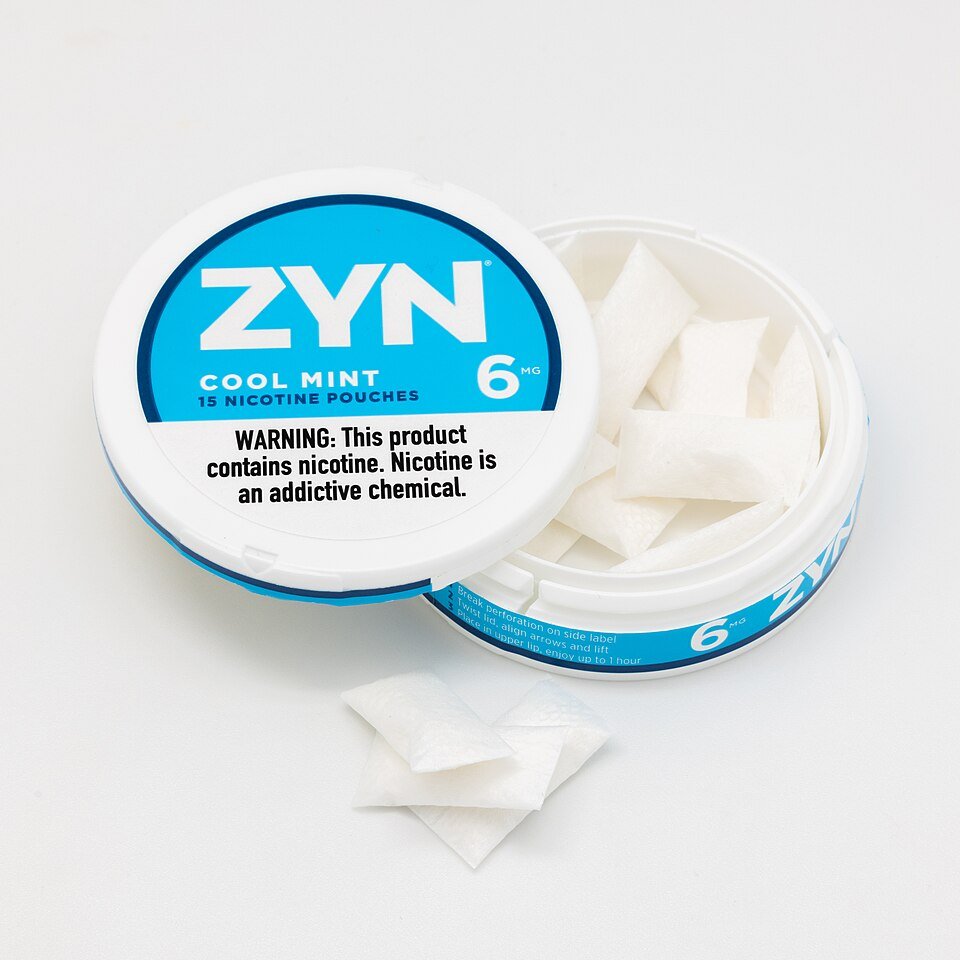
Nicotine pouches are the fastest growing nicotine product in North America. They contain no tobacco leaf, produce no smoke or vapour, and deliver nicotine through the lining of the mouth. A single six milligram pouch can deliver as much nicotine into the bloodstream in 30 minutes as a cigarette. The brands Canadians encounter most are Zyn, made by Philip Morris International, and Zonnic, the only pouch currently authorized for Canadian sale, made by Imperial Tobacco.
The industry frames pouches as a lifeline for smokers trying to quit. Health advocates frame them as the next generation of addiction. Both arguments contain evidence. Neither tells the full story.
What the Numbers Say
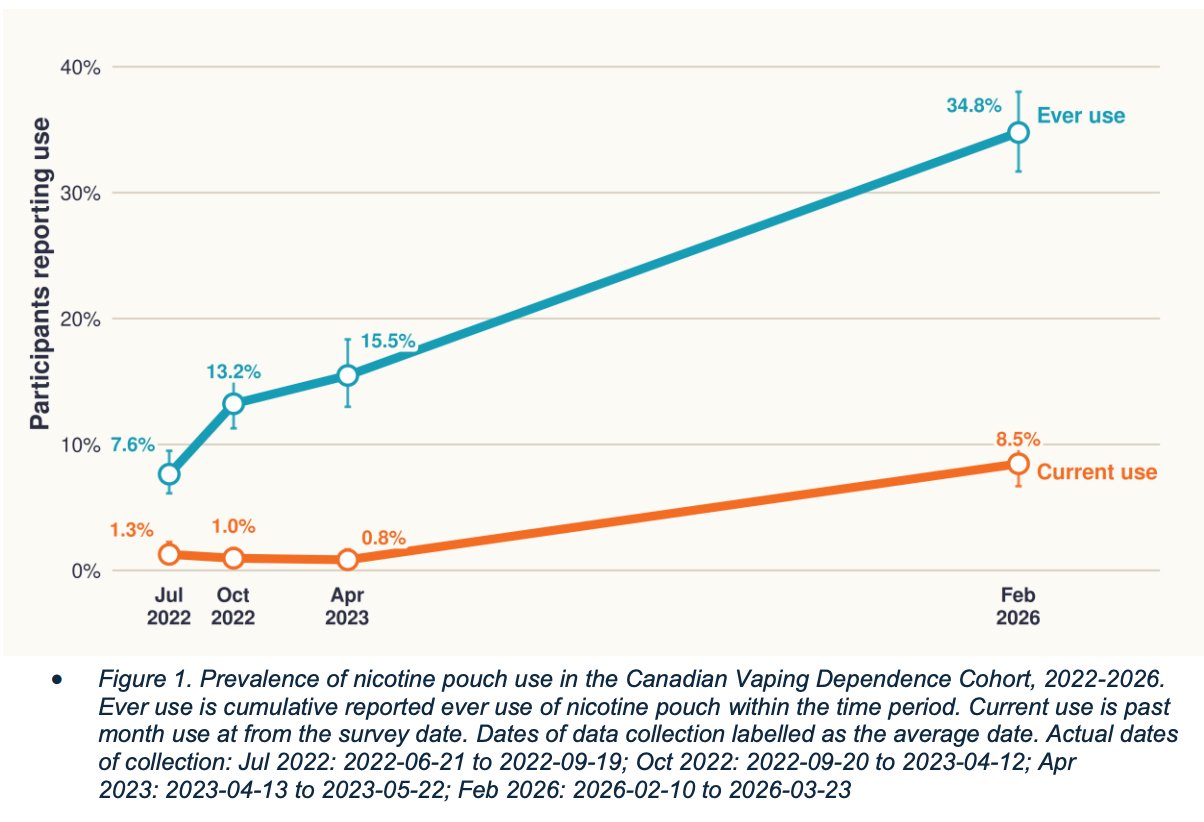
The Ontario Tobacco Research Unit released data in June showing that nearly 35 per cent of Canadians aged 17 to 27 have tried nicotine pouches, up from 7.6 per cent in 2022. Past 30 day use among the same group rose from 1.3 per cent to 9 per cent. The rate is significantly higher among young men. A separate COMPASS Quebec study found that pouch use among Canadian adolescents has drawn close to cigarette use in prevalence.
Researcher Michael Chaiton, who led the Ontario study, called the increase "a huge jump" and noted that the products are "primarily or mostly being used recreationally, among people who aren't trying to quit." If pouches were overwhelmingly reaching adult smokers seeking an alternative, the harm reduction argument would be straightforward. Instead, the data shows a product spreading fastest among people who were never smoking in the first place.
The World Health Organization warned in 2026 of the "rapid global expansion of nicotine pouch products, which are being aggressively marketed to adolescents and young people."
The Harm Reduction Question
Most Canadians do not realize that the science here is genuinely complicated. The products are almost certainly less harmful than cigarettes. A 2025 review in Frontiers in Public Health found that pouches contain "fewer harmful substances than traditional tobacco products" and produce reduced toxicant exposure compared to combustible tobacco. In June 2026, the FDA authorized the company to market Zyn as posing "lower risk of mouth cancer, heart disease, lung cancer, stroke, emphysema, and chronic bronchitis" than cigarettes.
But "less harmful than cigarettes" is a low bar. Researchers have detected formaldehyde, chromium and tobacco specific nitrosamines in pouch contents, 186 distinct chemicals in some products, including at least three classified as potentially carcinogenic. Long term oral cancer risk remains unknown. The American Cancer Society is blunt: "The short answer is that we don't know yet." Nicotine itself constricts blood vessels, raises blood pressure and disrupts brain development through age 25.
When I think about the health argument, the honest framing is this: for a 50 year old who smokes a pack a day, switching to pouches may potentially be a healthier, although still unideal alternative. For a 16 year old who has never smoked, starting on pouches is almost certainly a sincere harm. The policy question is whether you can serve the first group effectively without creating the second.
Sweden offers the closest real world test. Decades of widespread snus use, a related oral nicotine product, have produced the lowest smoking rate in Europe, below four per cent. Tobacco related mortality in Sweden has dropped accordingly. Harm reduction advocates point to the Swedish model as proof that oral nicotine products can displace cigarettes at a population level. The counterargument is that Sweden built its model over generations, with strong public health infrastructure and a culture that used snus before the modern marketing machine existed. Canada would be replicating the outcome while Big Tobacco controls the distribution.
What the Industry Wants
In 2024, Health Canada restricted pouch sales to pharmacy counters, capped nicotine at four milligrams per pouch, limited flavours to mint and menthol, and imposed packaging restrictions. Only Zonnic is approved for sale.
The industry's response has been aggressive. Imperial Tobacco launched campaigns through websites like bringbackthepouches.ca and iwantmypouches.ca, sites with opaque funding. A Conservative MP promoted Zyn on college campuses. Alberta Premier Danielle Smith called for loosening restrictions, arguing the rules make illicit access easier for youth. Ontario Health Minister Sylvia Jones raised the issue in federal meetings, eyeing a manufacturing opportunity.
Anyone who has followed tobacco policy in this country recognizes the playbook. The argument arrives dressed as consumer freedom and harm reduction. The lobbying targets convenience stores, where impulse purchases are highest and age verification is weakest.
Alimentation Couche Tard sent lobbyists to the PMO in March 2026 to discuss "flexibility" in regulatory frameworks. Founder Alain Bouchard met directly with the Prime Minister. A senior federal source told Loonie Politics there is "interest on our end" in loosening the pharmacy restriction, though no decision has been made.

Imperial Tobacco claims the pharmacy restriction caused Zonnic sales to "plummet" while cigarette sales rose 2.8 per cent and more than 500 million unregulated pouches entered the Canadian market. Independent data on those claims remains thin.
What Canada Decides Next
If you have ever watched a teenager tuck something under their lip during class, you understand why this product is different from cigarettes and vapes. It is invisible. It is odourless. It is almost impossible to police in a school, a workplace or a home. That makes regulation both more important and harder to enforce.
If Canada loosens pouch restrictions, allowing convenience store sales or expanding approved flavours, while investing in enforcement against unregulated products, youth access controls and adult cessation programs that use pouches as a supervised step down from cigarettes, the country could reduce smoking rates while limiting new adolescent addiction. Sweden's experience suggests the trajectory is possible.
If Canada loosens restrictions without those safeguards, if convenience store access arrives without age verification enforcement, if marketing rules weaken, and if the 35 per cent youth trial rate keeps climbing, then the country will have traded one public health crisis for another, replacing the decline of smoking with a new generation of nicotine dependence that the health system does not yet understand.
The tobacco industry has been wrong before about what it was selling and who it was selling to. That history does not mean pouches are cigarettes. It means the burden of proof belongs to the companies asking Canada to open the door wider, not to the regulators holding it shut.