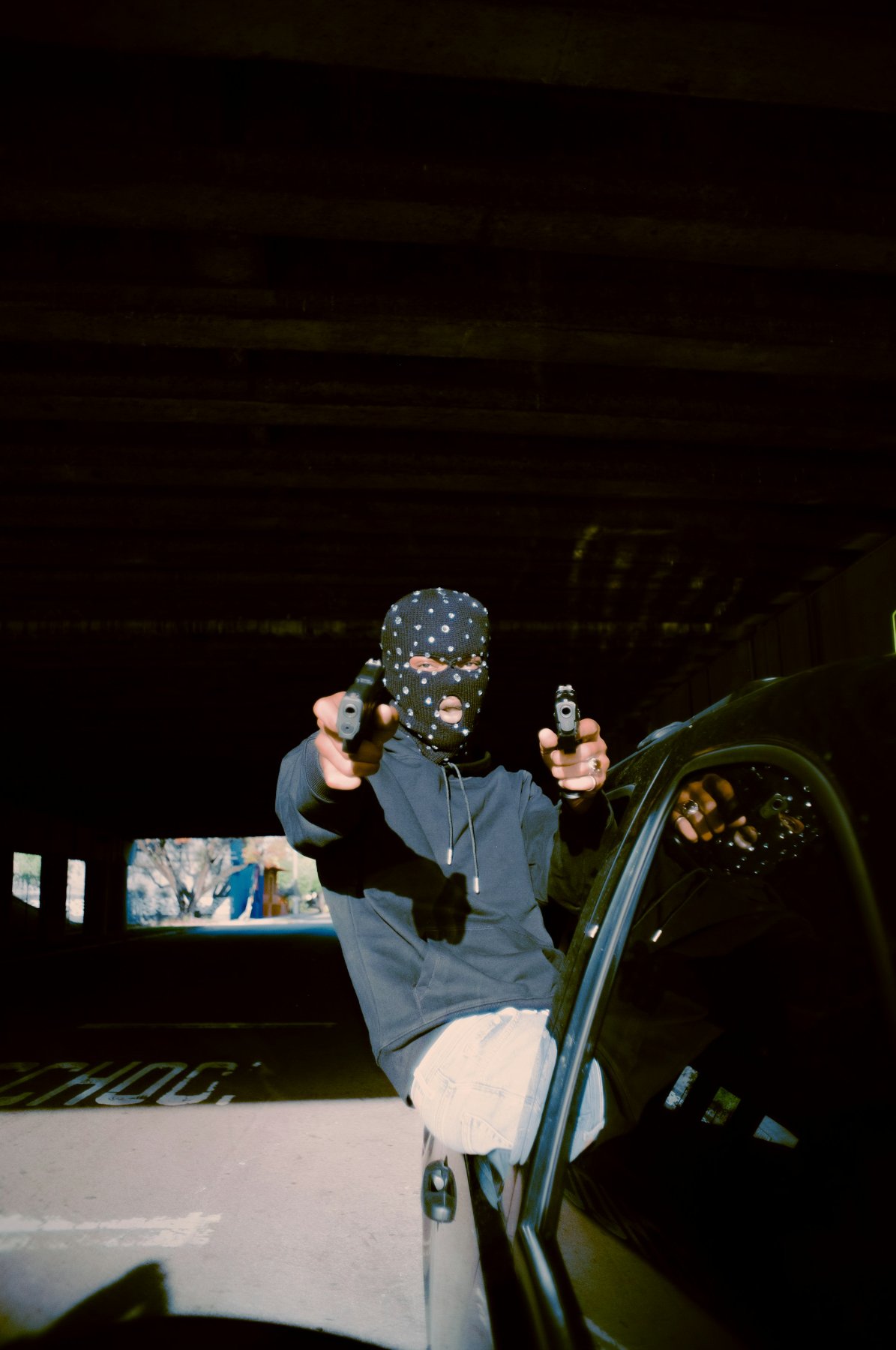
A letter attributed to the Bishnoi gang claimed 5,000 members and more guns than Canadian police. The claims are unverified. The extortion ecosystem behind them is not.
In August 2025, the Abbotsford Police Department received a letter purporting to speak for the Bishnoi gang and addressed to Canada's defence minister, military and police. Written with spelling errors and lacking punctuation, it claimed to represent an organization with 5,000 members, more firearms than Canadian police forces and an intention to rule the country. The document surfaced publicly in September 2026 through CBC News, after it was found in police and immigration records connected to an Immigration and Refugee Board hearing.
Its presence in official records supports the letter's existence. Nothing publicly available authenticates its author or validates a single operational claim. The alleged membership, the alleged firepower, the stated ambition all remain unsupported assertions. Dismissing the letter entirely would be its own kind of mistake. The question is what lies behind it.
Separating Threat From Theatre
The Bishnoi name operates in Canada as both a criminal network and a coercive brand. FINTRAC's April 2026 bulletin said the activity appears to involve loosely organized networks combining local actors with people claiming affiliations to overseas groups. Its analysis identified multiple groups that appear to be involved, including the Bishnoi and Bambiha gangs, while warning that copycats may invoke those names to magnify their threats. A demand letter signed with a notorious name carries weight whether or not the person who sent it has any connection to the organization.
That distinction matters for law enforcement and for the communities being targeted. Reported cases across British Columbia, Alberta, Manitoba and Ontario have involved encrypted threats followed in some instances by gunfire or arson. Commonly affected sectors include retail, transportation, construction, real estate and hospitality. Demands have ranged from hundreds of thousands to millions of dollars. The targets are not abstractions. They are families running businesses in Brampton, Mississauga, Caledon, Surrey and cities between.

The Ecosystem
FINTRAC described the financial architecture in cautious but specific terms. Money appears to move through cash deposits, email transfers and cryptocurrency, with nominees and money mules used to receive, layer or forward funds. Local enforcers collect. FINTRAC describes rapid transfers across provinces and fluid networks operating across multiple jurisdictions, including concentrations in the Lower Mainland and the Greater Toronto Area. The agency says the networks appear to recruit or rely on some financially vulnerable young male Indian nationals on study permits as intermediaries or local operatives. FINTRAC cautions that its financial indicators must be assessed in combination; nationality or student status alone is not evidence of criminal activity.
The resulting pattern is not a dramatic territorial incursion but a gradual erosion of ordinary commercial and family life. FINTRAC calls it a "sustained campaign of coercion": threats acquire power when victims believe violence may follow non compliance.
The letter's theatrical claims about ruling Canada are designed to intimidate whoever reads them. The broader extortion ecosystem gives such claims their coercive force: documented threats, protection demands and violence make an unauthenticated name capable of producing genuine fear.
Testing the Response

Canada's response has come in layers. On September 29, 2025, the federal government listed the Bishnoi gang as the eighty seventh terrorist entity under the Criminal Code. The listing allows property owned or controlled by the group to be frozen or seized and creates offences involving the knowing provision of property or financial services for its benefit.
British Columbia had established a 40 member, RCMP led Extortion Task Force twelve days earlier. At a November 28 summit in Surrey, federal and provincial governments announced $1 million for victim services, $1.5 million for the Yo Bro Yo Girl Youth Initiative and $4 million over four years for a Regional Integrated Drug Enforcement Team targeting organized drug crime and related extortion.
In July 2026, U.S. prosecutors unsealed three indictments charging 37 defendants through Operation Hard Ball, an international investigation involving Canadian authorities. The indictments concern three India based criminal organizations and include allegations of racketeering, extortion, drug trafficking and murder for hire. They remain allegations unless proved in court.
Separately, the CBSA reported that, as of September 3, 2026, its broader extortion enforcement initiative had produced 188 removal orders on various inadmissibility grounds and 111 removals. Those figures are neither Bishnoi specific nor equivalent to criminal convictions. Indian authorities also reported in September that Canada had deported Karamveer Singh Deo, whom Punjab police describe as a Bishnoi associate. Canadian authorities had not publicly charged him with a criminal offence, and the characterization of his role comes from Indian police.
Each measure addresses a real gap. Together they describe an institutional apparatus that is assembling. Whether it is assembling fast enough is the harder question.
The Real Measure

The measures that matter are specific: fewer businesses receiving demands this quarter than last, more victims reporting to police, financial intermediaries prosecuted, frozen assets recovered. FINTRAC describes notable concentrations of extortion activity in British Columbia and Ontario, including hundreds of investigations recorded across Brampton, Mississauga and Caledon during 2024 and 2025. Is protection reaching people in those communities before they pay rather than after they have been paying for months?
If investigations trace the money from local enforcers to international coordinators, and if prosecutions produce convictions that demonstrate real consequences, the extortion model loses its most important asset: the perception of impunity. If the response stalls at immigration removals and press conferences while coordinators remain untouched abroad, the ecosystem adapts and recruitment continues.
The South Asian communities at the centre of this are not a security category to be managed. They hold the most at stake and the most knowledge of how these networks operate at street level. Effective containment requires that reporting a threat feels safer than paying it off. That is a test of institutional trust, built one interaction at a time through victim support that actually reaches people, protection that arrives before the second demand and outcomes that justify the risk of coming forward.
Confidence, Not Certainty
The letter may be an authentic threat, an imitation intended to exploit the Bishnoi name, or some combination of intimidation and propaganda. The public record does not establish which. Its unverified claims do not deserve to set Canada's threat perception. What does deserve sustained attention is the functioning extortion infrastructure that gives the name its power. Canada has moved from awareness to enforcement. The remaining distance is measured not in announcements but in prosecutions, recovered assets, protected families and the slowly rebuilt confidence of communities that have learned, through hard experience, to be cautious about trusting institutions with their safety.